This month our Gospel readings are taken from chapter 22 of Matthew’s gospel account. In it, Jesus is being challenged by his three main opponents. They are the Herodians, the Sadducees and the Pharisees. We began reading this chapter two weeks ago. It begins with Jesus crafting the parable about a King’s grand wedding feast for his son, but the King is stiffed by all the invited guest. The King in turn rejects them and invites whoever will accept. The three antagonists arguing with Jesus come to realize that Jesus meant this parable to be about them; that they are the rejected by God; they will be excluded from God’s Kingdom. Normally these parties are fighting among themselves, but now they are collaborating in a united effort to discredit Jesus. First the Herodians challenge Jesus. These are the political sellouts among the Jews. They are aligned with King Herod, who is helping the Romans occupy and control the population, and collect a census tax from the people. They try trapping Jesus with a political question about whether the people should pay the tax or not. Next the Sadducees have a go at Jesus. They are the Temple people, the priestly class, scholars of Law of Moses. They accept only the first five books of the Old Testament, demanding that they be followed scrupulously and to the letter. They reject the belief in the resurrection i.e. as prophesied by the prophet Ezekiel. They construct an argument around a law of Moses that declared that if a man dies without having children, his brother is to marry the widow and raise up offspring for him. They create an argument around seven brothers, all marrying the same wife after each brother had died. “In the resurrection, then, whose wife will she be of the seven? For all of them were married to her.” Finally, the Pharisees take their turn, raising a disputed question of the day about which of the 613 commandments of the law is the most important or are all of equal importance. The Problem in all of this is not that questions do arise and look for answers, the problem is that ridged factions form around the questions, and instead of being open to discovering the best answers to the questions they are used to divide and separate people. These factions are more intent on dominating the others rather than getting to the truth. We are all familiar with the saying, “divide and conquer”. Jesus knows well that this is Satan’s strategy against the gospel message which he is announcing and it will continue on as the life of the Church begins to unfold. St. Paul describes it in 1 Cor. 12; “What I mean is that each one of you says, “I follow Paul,” or “I follow Apollos,” or “I follow Cephas,” or “I follow Christ.”. Is Christ divided? Was Paul crucified for you? Or were you baptized in the name of Paul? Paul goes on in chapter 12 to use the analogy of the human body with its many parts all working in harmony to describe how the Church and its many members are to unify. Then in chapter 13, he gives that beautiful teaching on the unifying principal of love – which flows from Jesus’ teaching in today’s gospel, the primacy of Love, the greatest Commandment. Just look around our society today. Have we ever seen such division, contentedness, animosity and argument among people? We must not let ourselves to be drawn into it. As Christians formed in the gospel, our calling is to bring the healing and unifying message of the Gospel of Love to a divide world. |
Voices is a resource for personal prayer and devotion from a Catholic perspective - especially for those beginning the practice of meditative prayer.
v
Tuesday, 20 October 2026
Thirtieth Sunday of the Year - 2026
Sunday, 18 October 2026
Twenty-nineth Sunday of the Year
"For this Sunday we are looking at not a parable of Jesus, but a riddle of Jesus. You could call this the riddle of Caesar and the coin. It's the famous story of the coin that Jesus is presented with, and he is asked whether it is lawful to pay taxes to Caesar or not, and then gives his response. So for the 29th Sunday in Ordinary Time for Year A, we are going to be looking at Mt. 22:15-22: LINK . |
Wednesday, 30 September 2026
Twenty-eighth Sunday of the Year - 2026
At the time Jesus formed this parable, people would be familiar with the custom for a great king, hosting the wedding of his son, to provide all the wedding guests with elaborate wedding garments so the whole affair would look spectacular. Not to accept and wearing these garments would be a great insult, provoking the king’s anger. Jesus forms this, parable, using the symbolism of a king’s wedding for his son, to convey a real and serious lessons to people at that time, and to all of us today. This parable encapsulates a short history of salvation. Looking at its components we are to understand that: + The great King is the Lord God, his Son is Jesus. + The wedding feast is that of the Lamb of God, with the saints assembling with him in heaven. + Those first invited to the wedding are the people of the O.T. + The servants sent out with the invitation are the prophets of the O.T. who were ignored, abused, and murdered. + The army sent to punish those who did this is the Roman army, who destroyed Israel. + The new servants with a new invitation are the evangelist of the gospel. + The newly invited, “both good or bad”, are the peoples of all the world – including us. + The wedding garment provided is the garment of mercy and salvation, covering all unworthiness. + Wearing it is a life of holiness – not wearing it a life of un-repentant sinfulness. Through this parable Jesus teaches that there is only one true King, the Lord God, > only one divine Son, Jesus, > only one wedding feast, eternal life of heaven, > only one invitation, the gospel, > only one body of servants sent out to invite, the Church, united in the Holy Spirit. This parable of Jesus is as fresh and relevant for us today as it was to those who first heard it. As it was then, so it is now, the invitation continues to go out and the invitation today is receiving the same mixed results. Two questions remain: ? Have I accepted the invitation, embracing it unconditionally? ? Am I putting on the garment of a truly holy life? |
.
Tuesday, 22 September 2026
Twenty-seventh Sunday of the Year - 2026
Monday, 21 September 2026
Twenty-sixth Sunday of the Year - 2026
Wednesday, 16 September 2026
Twenty-fifth Sunday of the Year - 2026
Saturday, 22 August 2026
Twenty-first Sunday of the Year - 2026
Sunday, 16 August 2026
Twenty-sixth Sunday of the Year
Thursday, 16 July 2026
Saturday, 11 July 2026
Fifteenth Sunday of the Year - 2026
Once again the gospel text presents us with the Parable of Sower. Today we have Matthew's Account – Mark and Luke also include this teaching. Jesus presents the Word of God as the "Good Seed" the sower sows, and describes the different soil conditions the seed lands upon. Is there a way we could re-imagine this scene Jesus uses so as to see it in the context of our religious experience today? For instance, how might we interpret, in practical terms, the different soils, different religious conditions, into which the seed falls? And what identity might we give to the good seed that is sown? We could interpret the seed as the grace-to-believe placed in one’s soul at baptism, and the different soil conditions as the different religious environments that a newly baptized encounters today. So the soil is us, us Catholics, our Christian families, our parishes, our diocese, all of us Catholics that make up the Church today, we are that soil. Here it is necessary to recall Pope John Paul II’s teaching in his papal document on Catechesis - #19, where he points out that a newly baptized is given this grace, this seed of faith, potentially. [the capacity to believe placed within them by Baptism and the presence of the Holy Spirit] Now the recipient must grow and develop and become an informed, committed follower of Jesus – the question then is how will the faith of this newly baptized do. So let’s look at the four soil conditions as four different religious environments a newly baptized child faces. First condition is the Harden Path; o For all practical purposes, religious practice by those who surround the newly baptized is dead – no one goes to church. In this case, baptism itself may not even happen. If does it, there is no hope of it ever to growing. The seed of faith lies dormant. Second condition is the Shallow Soil; o There is some religious practice to which the newly baptized is exposed – Christmas and Easter Mass – maybe first communion, maybe even confirmation but little more. Whatever little faith that one may have begun with, withers and fades away from lack of support Third condition is the Choking Weeds; o The newly baptized may have the early start of family support but as that one moves on to begin their own life, they find themselves surrounded by a world of strong and conflicting values; where religious practice is viewed as worthless. They are surrounded by constant negative experiences toward religion – no friends with whom to share faith – immersed in a secular culture that has no room for believers. Fourth condition is the Good Soil; o A newly baptized, born into a family of strong, active faith, exposed to a healthy parish experience, guided by mature religious instruction and advice – this seed of faith comes alive and takes on a strong faith life of its own. It survives to become a strong, practicing Catholic. |
Saturday, 4 July 2026
Fourteenth Sunday of the Year - 2026
To know someone implies person-to-person encounter. The word here is “gnosis”. I know for a fact that Justin Trudeau is the prime minister of Canada. I have been given a lot of information about him through other’s reports, but I cannot claim to really “know” him until I meet him, interact with him, spend time with him, experience him personally. The second key word Jesus uses is “Father”. To know God as your Father is profoundly more significant than knowing there is a God. Imagine someone who grew up never knowing their father – separated for some reason – then one day it happens, a man comes and stands in front of him as another says, “James, here is your father that you do not know.” James may know a lot about what fathers are to other people, but now he knows his father, and begins a whole new life with his father. When Jesus says these words: “No one knows the Son except the Father, and no one knows the Father except the Son and anyone to whom the Son wishes to reveal him." This is what he means by "knows" – real, encounter, person-to-person, filial, tender, intimate, loving. The Hebrew word for Father is “Abba”. One of my scripture teachers told a story of how this word Abba, hit home for him. He was visiting the Holy Land, and was in a busy marketplace. A little child was there with his father, shopping. Then the little boy lost sight of his father, and began to call out, “Abba, Abba, Abba, Abba, Abba”, (father, father, father,) – “here my son, here I am”, the father replied. It was then that the teacher appreciated in an intimate, personal way what Jesus meant by “… knowing the Father.” We are like lost children who don’t know our true Father, our tender, loving and protecting Father, until that graced encounter, when Jesus says to us, “come now, look and see, here is Abba, your Father”. Do you know your Father, your heavenly Father? Is He your Abba, your loving, protecting, life-giving Father? If not, then ask Jesus to help you to know the Father as he knows him. |
.
Friday, 26 June 2026
Thirteenth Sunday of the Year
Whoever loves father or mother more than me is not worthy of me; and whoever loves son or daughter more than me is not worthy of me; and whoever does not take up the cross and follow me is not worthy of me. Those who find their life will lose it, and those who lose their life for my sake will find it. "Whoever welcomes you welcomes me, and whoever welcomes me welcomes the one who sent me. Whoever welcomes a prophet in the name of a prophet will receive a prophet's reward; and whoever welcomes a righteous person in the name of a righteous person will receive the reward of the righteous; and whoever gives even a cup of cold water to one of these little ones in the name of a disciple—truly I tell you, none of these will lose their reward." Matt. 10:37-42 |
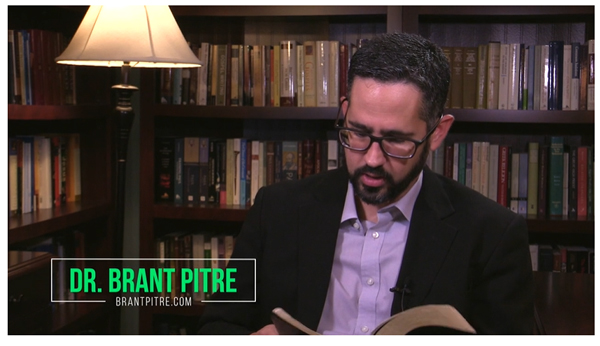
If ever there was someone who wanted to put you to the test about your Christian faith, today's gospel text would make a perfect weapon. “Whoever comes to me and does not hate their father and mother, spouse and children, brothers and sisters, yes, and even their life itself, cannot be my disciple.” So your Jesus wants you to hate your family – it says so right here. Now if you reply by saying that Jesus didn’t really say that or mean that, you create a whole lot of trouble for yourself. Would that not be true of anything the gospels quote Jesus as saying? Perhaps a little parable might help us here. Suppose you belonged to a family of a non-Christian religion. Your father is a strong, devote believer and he strictly demands that you follow this same religion and all its beliefs and practices. One day you come and announce that you are going to become a Catholic; you believe that Jesus is the son of God and that the Catholic Church is the true way to follow Christ. Your father tells you that if you do this, he will disown you, strip you of your inheritance and nothing more to do with you. And so you leave. In other words it is all or nothing. In today's society, the worst thing you can do is promote hate. Hate crimes are of the worst kind of evil. Here Jesus is using hyperbole; which is an exaggerated statement or claim not meant to be taken literally. Like when Jesus said “If your hand causes you to sin, cut it off. If your foot causes you to sin, cut it off. And if your eye causes you to sin, pluck it out. It is better for you to enter the kingdom of God with one eye than to have two eyes and be thrown into hell.” Mk. 9:43 Jesus is not teaching hate, but he is teaching unconditional love. To be his disciple Jesus wants our whole heart, our whole soul, our whole mind with all our strength. The problem we face in the Church today is mediocrity – "I like some of the things the Church teaches but certainly not everything". In Matthew’s account of this issue Jesus is warning that to follow Him unconditionally will have its challenges. “A man’s enemies will be the members of his own household. Anyone who loves his father or mother more than Me is not worthy of Me; anyone who loves his son or daughter more than Me is not worthy of Me; and anyone who does not take up his cross and follow Me is not worthy of Me. Whoever finds his life will lose it, and whoever loses his life for My sake will find it. Mtt. 10:36 Jesus wants our whole heart - first and above all. Half-hearted faith will never last in today's world. It slowly drains away until it is all gone. The choice is now in our hands. Dr. Brant Pitre has an excellent commentary on today's gospel passage. Go To: . . . LINK . . . |
Saturday, 13 June 2026
The Eleventh Sunday - 2026
In this Sunday's 2nd. Reading from St. Paul's Letter to the Romans we read: “God proves his love for us in that while we still were sinners Christ died for us . . . while we were enemies, we were reconciled to God through the death of his Son . . .” But why did Jesus have to die to save us? Could God not say from heaven: “Your sins are for given; come now and enter heaven and eternal life”? The problem with that is it fails to understand the nature of our intellect and free will, and the nature of sin; the power it holds over our souls. People in the bondage of sin are so by choice, and can no longer hear God’s voice from heaven. "Son of Man, you live in a rebellious house that has eyes to see, but they can't see, and ears to hear, but they can't hear, since they're a rebellious house. Jerimiah 12:2. . . . so that, "'they may be ever seeing but never perceiving, and ever hearing but never understanding; otherwise they might turn and be forgiven!'" Mk 4:12 Let me offer an analogy. A person goes partying one night … becomes intoxicated … gets into a car and drives away at high speed … fails to negotiate a turn in the road … roles the car and ends up in the ditch, injured and hopelessly pinned in the over-turned car. Then the car becomes engulfed in flames. That person cannot save themselves, they are going to die a horrible death – and it is totally their fault. Now a stranger comes on the scene, climbs into the burning vehicle and calls to the trapped man, "here, take my hand, I can save you!" The rescuer frees the trapped person and pushes him out of the car to safety; but this can only be done in a way that makes the rescuer unable to get out himself … therefore, he must die in place of the trapped person. It’s the only way to save the one hopelessly trapped do to the choices they made. Sin entraps our souls and binds us to its deadly way, traps us in the state of eternal separation from God, from God’s truth, from eternal life. (Trapped like the person in the flaming car.) God must come to where the sinner is; first to break Satan’s hold over us by incarnating, making himself visible and recognizable on our terms. Then, one-on-one, offering us mercy, convincing us to reject sin and to accept forgiveness. Then God must lead us out of our hell of ignorance into the light of truth. Jesus, the Son of God is the only one who can do this. He must become one of us, to be with us where we are. That is the only way we can hear God’s voice. Satan tries to drive Jesus away from rescuing us by the threat of the Cross. He fails. Jesus’ love for us is greater than any fear Satan can employ, even death itself. Satan’s hold is broken, it remains for us to listen to the Voice of forgiveness and follow him out. We say Jesus died for my sins on Good Friday. Perhaps we more accurately should say, Jesus died BECAUSE of my sins. Because by my free choice I willing followed Satan into the hell of separation from God’s truth, it is only by Jesus entering into my death situation, to meet me there and convincing me of his love, can Jesus save me. Only from the Cross can we hear; “This day you will be with me in Paradise." |


